
TORONTO SHORELINES
Advocating for the preservation of Toronto's longest natural shoreline
Guildwood, Grey Abbey & East Point represent 3 km of continuous sand beach


Losing a Beach to Shoreline Hardening


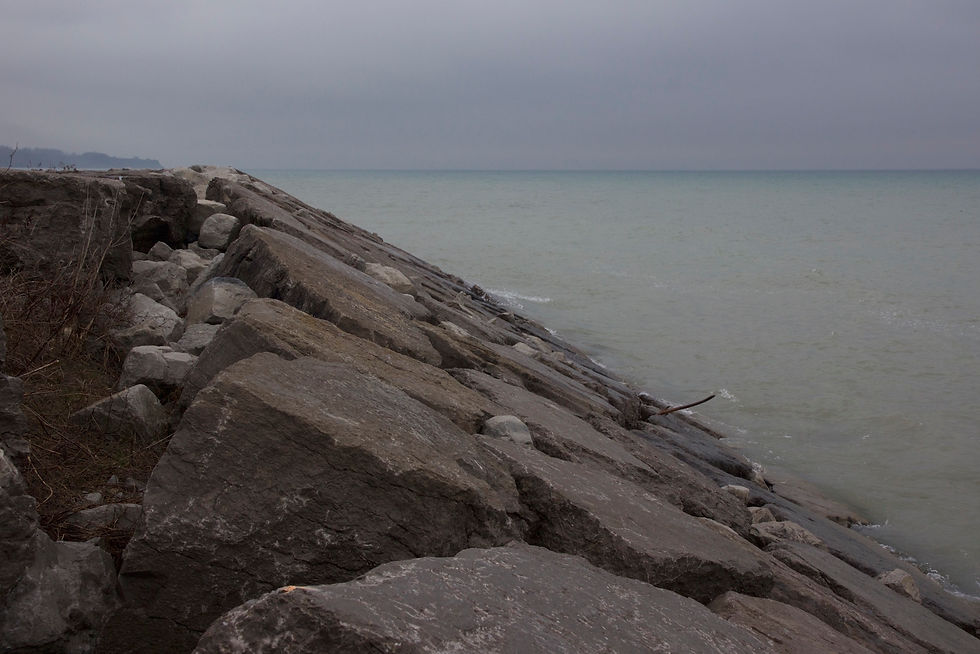
Shoreline hardening involves the installation of structures that replace the natural shoreline with hard surfaces of rock, concrete and paved surfaces. The natural shoreline is reshaped, altered and removed permanently. The shoreline is restructured with seawalls, revetments, armour rocks, pavement, headlands, nodes and riprap.
Despite the prevelance of shoreline hardening, the impact on natural ecosystems (both terrestrial and aquatic) is often ignored. Benefits of shoreline hardening are presented to the general public in support of the practice and the negative effects are denied.
There is a growing trend of global awareness and extensive research available revealing the importance of keeping shorelines natural and there are some coastal communities that are even reversing the practice.
'The Society for Freshwater Science' reveals the benefit of a natural shoreline in this document by Stacey Wensink and Scott Tiegs:
Shoreline Hardening Alters Freshwater Shoreline Ecosystems
Freshwater shorelines play critical roles in the maintenance of freshwater and riparian ecosystems that far exceed their spatial extent. As ecotones, shorelines mediate resource exchanges between aquatic and terrestrial ecosystems and, thereby, influence the ecological condition of both systems.
Despite occupying a small area of the landscape, shorelines often possess high levels of biodiversity, provide habitat for rare and endemic species, are feeding areas for shore birds and function as spawning grounds and nurseries for fish.
In addition, shorelines are sites of organic-matter retention, accumulation, and processing, and play unique roles in the biogeochemical cycling of nutrients.
Despite their ecological value and the ecosystem services that shorelines provide, these sites are frequently altered by human development, but with poorly understood ecological consequences.
The practice of shoreline hardening on the Great Lakes is one of the many stressors created by urban development:
Here are some the facts on shoreline hardening from the Great Lakes Environmental Assessments and Mapping Project (GLEAM). For more in-depth info, please visit their website. Shoreline structures constructed to protect and maintain human investments along the coast have a number of adverse impacts on nearshore ecosystems. In particular, artificial shoreline protective structures can:
-
destroy local vegetation, often replacing it with impervious surface and impacting storm water flow
-
cause local increases in water turbidity
-
alter nearshore sediment dynamics
-
accelerate lake bed erosion
-
facilitate the establishment of nuisance species like zebra and quagga mussels
From the Great Lakes Tributary Modelling Program, here are the facts on the environmental damage and biological processes linked to shoreline hardening, from their website:
-
burial or removal of habitat for bottom dwelling species due to shifts in beach material
-
alterations in or complete loss of vegetative cover resulting in temperature fluctuations in shallow water
-
loss of spawning, foraging and nursery habitat for fish due to alteration in the substrate
-
loss of migratory corridor for fish caused by shifts in water elevation from existence of armoring
-
decreased organic inputs due to loss of vegetation adjacent to the shoreline
-
interruption of beach access to foraging wildlife
Shoreline hardening is often used as a reason for enhancing aquatic habitat so it's important to point out that fish communities rely on many biological components.
The following information about the dynamics of shoreline habitat is from the Toronto Aquatic Habitat website. Please visit them for more about the importance of the following:
-
phytoplankton and zooplankton
-
algae
-
invertebrates
-
aquatic and riparian vegetation
-
reptiles and amphibians
-
birds
-
mammals
Shaping the future of Toronto's shoreline
Below on the left, is an image of Lake Ontario's shoreline adjacent to Guildwood Park. It demonstrates how the natural transition from land to water is completely obliterated. The waters edge is hardened with armour rocks. It creates a solid barrier preventing access to the water.
The shoreline prior to this may have provided unique habitat for wildlife. It may have featured a more natural shoreline, one that would also have provided enjoyment for leisure or recreational activities. One may never know, because now it is lost forever. Once shoreline hardening is implemented, it cannot be reversed.
Below on the right, is the section of natural sand shoreline of Grey Abbey Beach. This is the area that is currently slated for shoreline hardening. Our mission is to see the natural sand beach preserved in is entirety and in its natural state.


Email the TRCA today to let them know you would like to see this shoreline preserved
Your opinion matters. Let the conservation authority know that destroying this shoreline is not an option. Tell them you would like to see this beach preserved in its original state. Let's work together to save this natural treasure.